01 · INTRODUCTION
What does ephemeris mean?
EPHEMERIS
from Greek ephēmeros — “daily”
A record of the positions of celestial bodies over time.
In astronomy and celestial navigation, an ephemeris shows where astronomical objects are positioned in the sky at different moments in time.
Your Astronomical Calendar is a visual ephemeris of the main celestial bodies in our Solar System throughout 2027.
Follow the movement of the planets, the cycles of the Moon and the path of the Sun through the zodiac constellations. Discover the rhythms that shape our view of the sky.
How is the calendar organized?
The Earth is the point of reference at the centre of this celestial map. From our perspective, the Sun appears to trace a path across the zodiac constellations throughout the year. This apparent path is called the ecliptic. Since the Moon and planets move in orbits that lie close to the same plane, we can see them travelling close to the ecliptic from Earth.
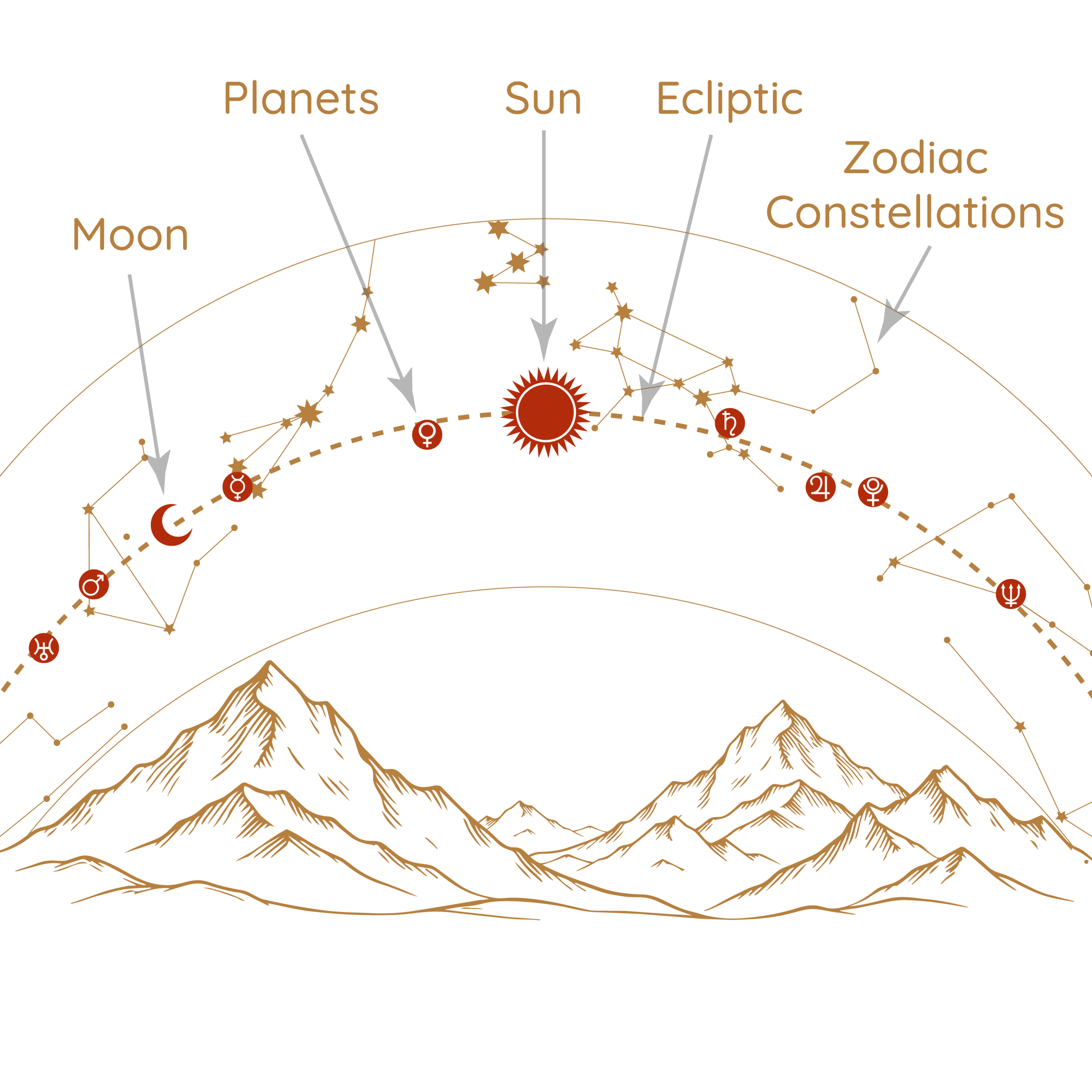
The calendar translates these movements into a circular map. Reading it from the centre outwards, you can follow the Moon’s cycles, the zodiac constellations, the paths of the planets and the main astronomical events of 2027.

EARTH
Our point of observation

INNER CIRCLE
Moon · Zodiac · Planets · Sun

OUTER RING
Moon phases · Moon distance
Meteor Showers · Equinoxes & Solstices
About Time Zones
All times for the astronomical events in this calendar are given in UTC (Coordinated Universal Time). To find the exact time of an event at your location, convert the UTC time to your local time zone. Depending on where you are, some events may take place on the previous or following day.
Convert UTC to your local time
UTC → Calendar reference time
UTC−8 / UTC−7 → Pacific Time*
UTC−5 / UTC−4 → Eastern Time*
UTC+0 / UTC+1 → UK*
UTC+1 / UTC+2 → Central Europe*
* The offset changes when daylight saving time is in effect.
When does the date change?
Hora del Este (ET)
Nueva York · UTC-5 /UTC-4
Nueva York · UTC-5 /UTC-4
| ACONTECIMIENTO | UTC | LOCAL |
|---|---|---|
| Cuarto menguante | 30 mar | 29 mar |
| Apogeo lunar | 31 mar | 30 mar |
| Júpiter directo | 13 abr | 12 abr |
| Perigeo lunar | 14 abr | 13 abr |
| Luna llena | 19 jun | 18 jun |
| Luna nueva | 4 jul | 3 jul |
| Cuarto menguante | 25 ago | 24 ago |
| Luna nueva | 30 sep | 29 sep |
| Plutón directo | 18 oct | 17 oct |
| Luna llena | 14 nov | 13 nov |
| Perigeo lunar | 19 nov | 18 nov |
| Cuarto menguante | 21 nov | 20 nov |
| Luna nueva | 28 nov | 27 nov |
| Perigeo lunar | 16 dic | 15 dic |
| Solsticio de invierno | 22 dic | 21 dic |
| Saturno directo | 24 dic | 23 dic |
Because the calendar uses UTC, some astronomical events may occur on the previous or following day in your local time zone. The tables below show the 2027 events whose local date differs from the date printed in the calendar. You can download the printable versions below.
Find out which 2027 events take place on a different date from the one printed in the calendar in your time zone. Daylight saving time changes are already taken into account.
| Event | Calendar UTC | Your local date |
|---|
The conversion automatically takes daylight saving time changes into account for each date. Meteor showers are not included because their peaks are given as a night or time interval rather than as a single UTC instant.

Date changes for your time zone
Hora del Pacífico (PT)
Los Ángeles · UTC-8 / UTC-7
Los Ángeles · UTC-8 / UTC-7
| ACONTECIMIENTO | UTC | LOCAL |
|---|---|---|
| Cuarto creciente | 14 feb | 13 feb |
| Perigeo lunar | 19 feb | 18 feb |
| Cuarto menguante | 28 feb | 27 feb |
| Apogeo lunar | 3 mar | 2 mar |
| Perigeo lunar | 19 mar | 18 mar |
| Cuarto menguante | 30 mar | 29 mar |
| Apogeo lunar | 31 mar | 30 mar |
| Júpiter directo | 13 abr | 12 abr |
| Perigeo lunar | 14 abr | 13 abr |
| Cuarto creciente | 13 may | 12 may |
| Luna llena | 19 jun | 18 jun |
| Apogeo lunar | 22 jun | 21 jun |
| Cuarto menguante | 27 jun | 26 jun |
| Luna nueva | 4 jul | 3 jul |
| Perigeo lunar | 2 ago | 1 ago |
| Cuarto creciente | 9 ago | 8 ago |
| Cuarto menguante | 25 ago | 24 ago |
| Equinoccio de otoño | 23 sep | 22 sep |
| Luna nueva | 30 sep | 29 sep |
| Plutón directo | 18 oct | 17 oct |
| Perigeo lunar | 25 oct | 24 oct |
| Luna llena | 14 nov | 13 nov |
| Perigeo lunar | 19 nov | 18 nov |
| Cuarto menguante | 21 nov | 20 nov |
| Luna nueva | 28 nov | 27 nov |
| Cuarto creciente | 6 dic | 5 dic |
| Perigeo lunar | 16 dic | 15 dic |
| Solsticio de invierno | 22 dic | 21 dic |
| Saturno directo | 24 dic | 23 dic |
Hora de Europa Central (CET / CEST)
España · Francia · Alemania · Suecia, etc.
España · Francia · Alemania · Suecia, etc.
| ACONTECIMIENTO | UTC | LOCAL |
|---|---|---|
| Eclipse lunar penumbral | 20 feb | 21 feb |
| Luna llena | 20 feb | 21 feb |
| Luna nueva | 6 abr | 7 abr |
| Cuarto creciente | 13 abr | 14 abr |
| Luna llena | 20 abr | 21 abr |
| Inicio de la retrogradación de Neptuno | 9 jul | 10 jul |
| Apogeo lunar | 11 sep | 12 sep |
| Luna llena | 15 sep | 16 sep |
¿No estás en ninguna de estas zonas horarias?
Convierte la fecha y la hora UTC del calendario a tu hora local →
02 · INNER CIRCLE
THE MOON ☾

The Moon’s journey throughout 2027 is represented as a spiral moving from the outside towards the centre.
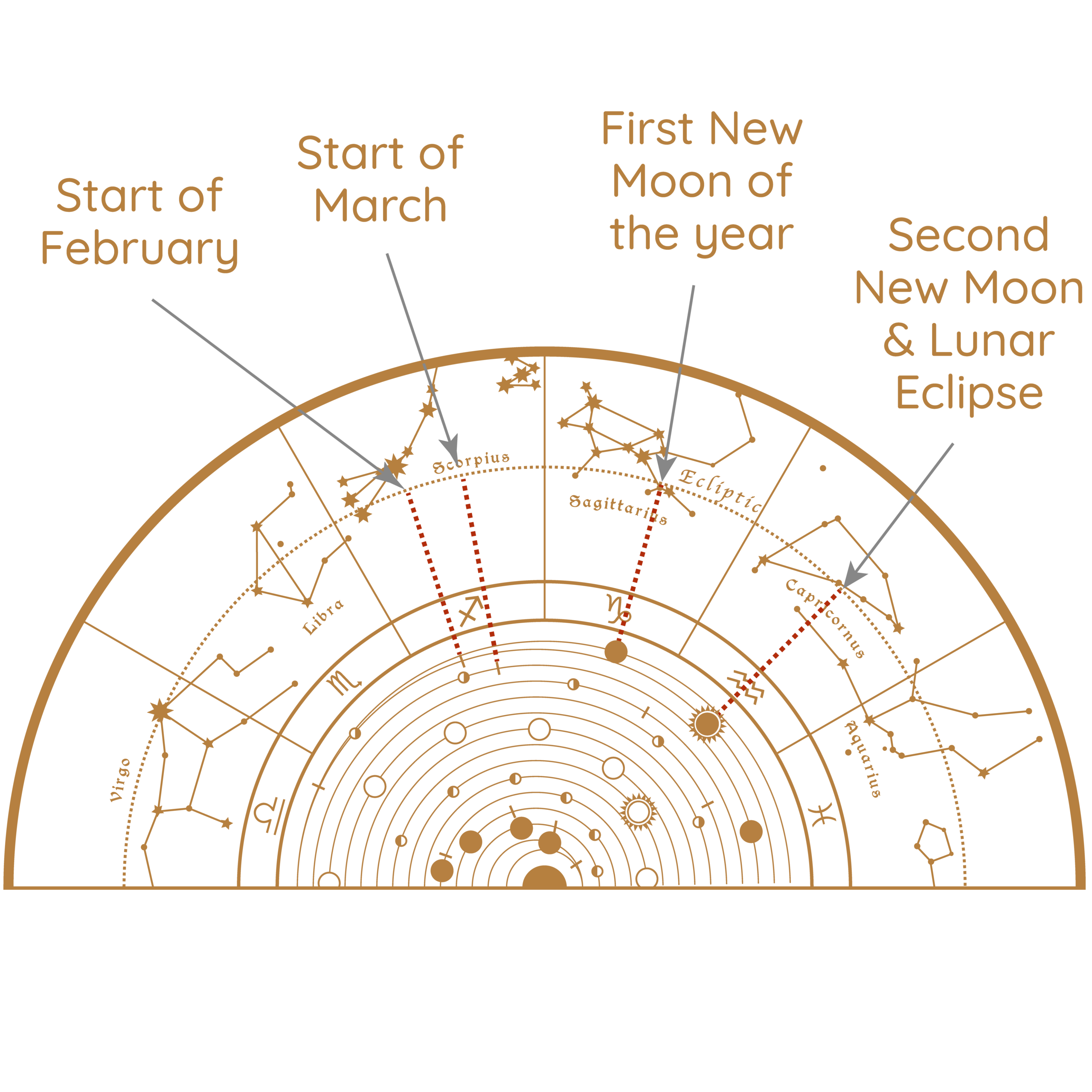
Each turn of the spiral represents one lunar cycle. As the Moon moves across the zodiac, the symbols for the New Moon, Quarter Moons and Full Moon show where it is located during each phase and cycle. Following the spiral allows you to see how each lunar cycle begins at a slightly different point in the zodiac.
FULL MOON
WANING MOON

NEW MOON
WAXING MOON
Learn more about the Lunar cycle
A lunar cycle lasts approximately 29.5 days, from one New Moon to the next. During this time, the Moon travels around the Earth and passes through the zodiac constellations, while its illuminated appearance gradually changes from waxing to full, waning and back to new.
Because the lunar cycle does not match the length of a calendar month or the Earth’s yearly orbit around the Sun, each new cycle begins at a slightly different point in the zodiac. This gradual shift is what creates the spiral pattern you see in the calendar.
Follow the spiral inward to trace the Moon’s journey through the whole year.
THE ZODIAC CONSTELLATIONS ✧
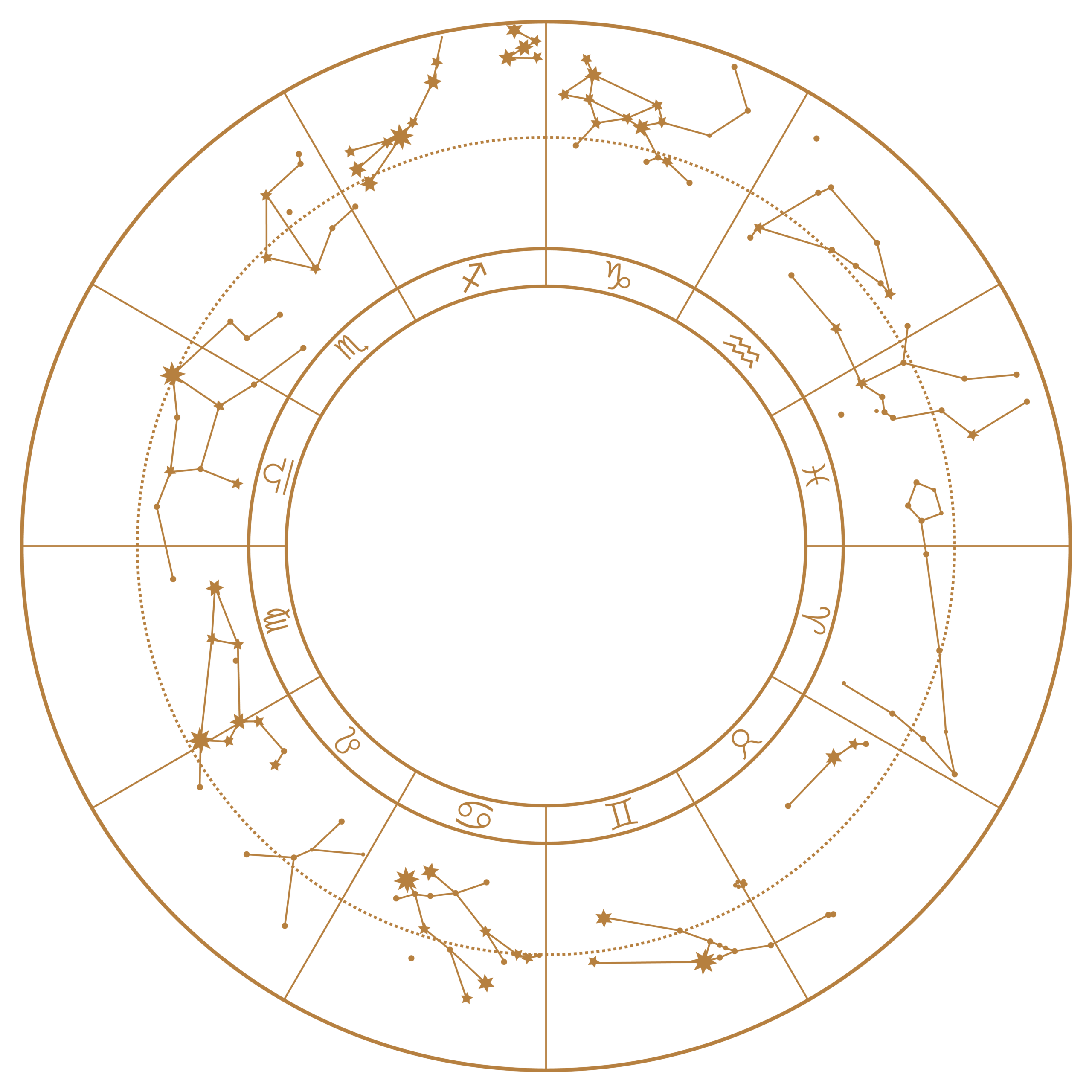
The zodiac constellations form a belt across the sky along the ecliptic, the path followed by the Sun throughout the year.
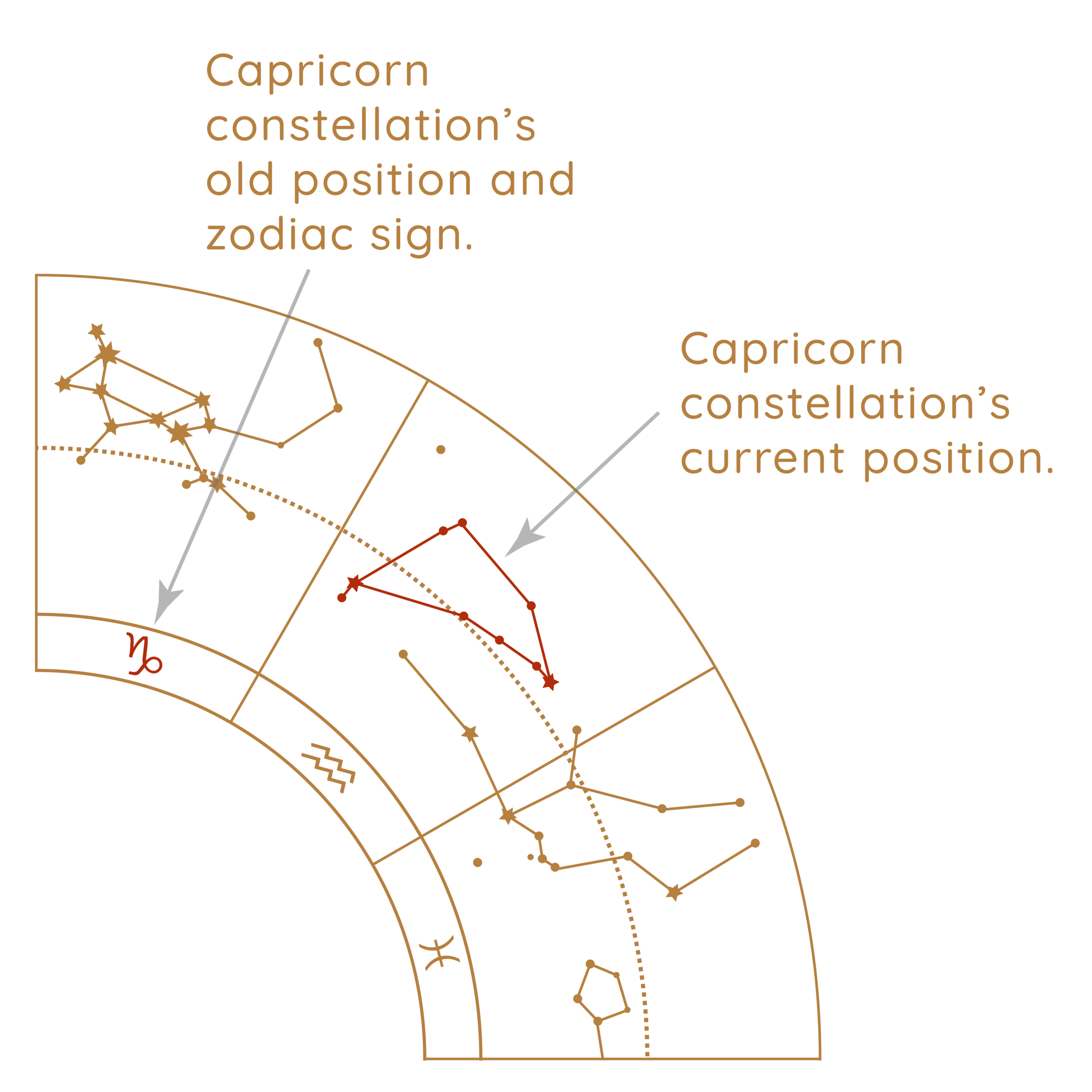
The calendar shows two different ways of looking at the zodiac. The constellations are placed according to their current astronomical positions in the sky, while the zodiac symbols refer to the traditional twelve-part division still used in astrology.
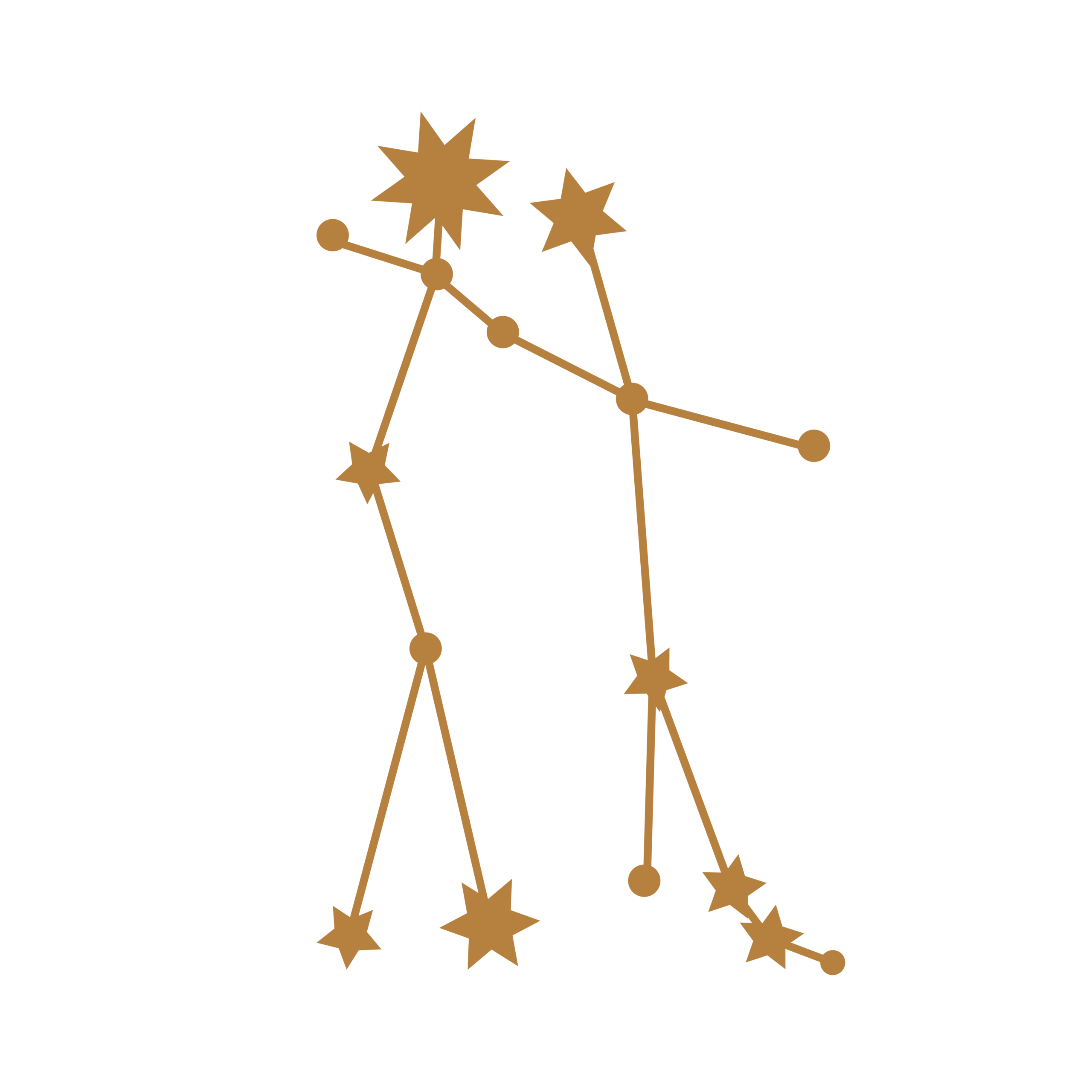
CONSTELLATIONS
Where they are in the sky today.
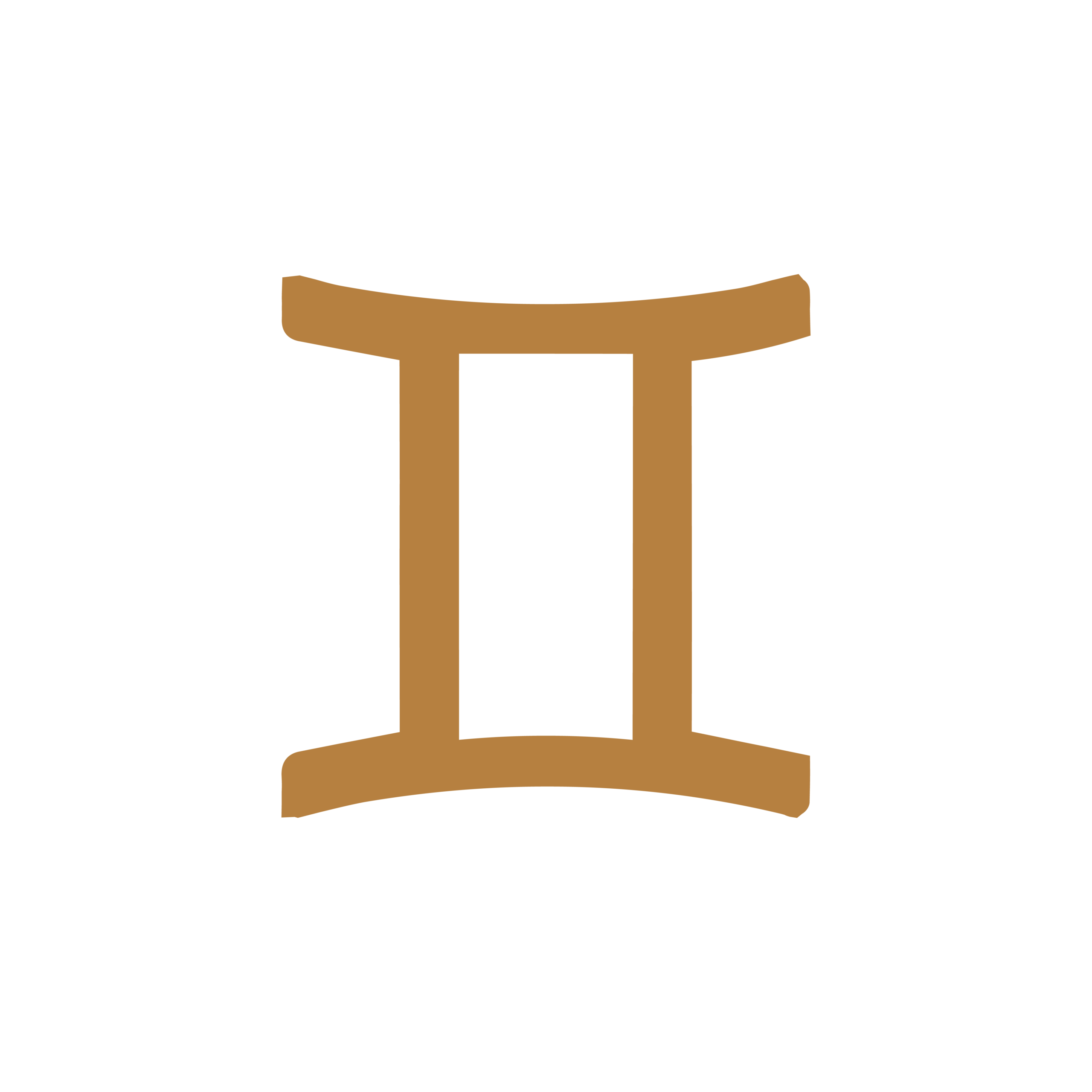
ZODIAC SIGNS
The traditional twelve-part system.
Therefore, the constellation and its corresponding zodiac sign do not always occupy exactly the same position on the calendar.
Why don't they match?
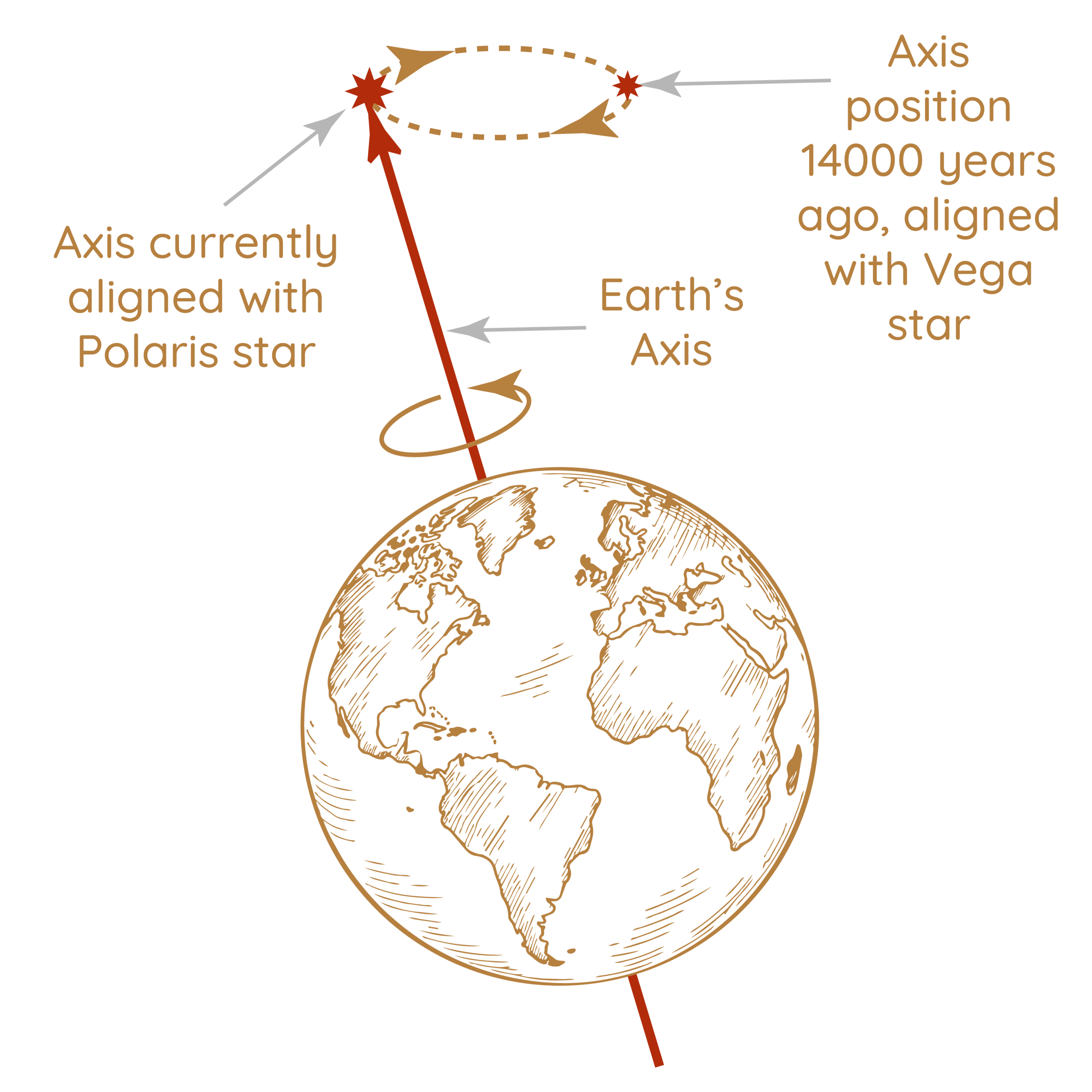
Earth’s rotational axis slowly changes its orientation over time, a phenomenon known as axial precession. Because of this gradual movement, the apparent position of the Sun against the constellations has shifted over the centuries.
Around 2,000 years ago, the Sun was located in Aries around the March equinox. Today, at the same time of year, it appears in Pisces.
The astronomical constellations therefore reflect the sky as we observe it today, while the familiar zodiac signs preserve the traditional divisions established in antiquity.
THE PLANETS ◎
The outer planetary ring shows the apparent path of the Sun and planets through the zodiac constellations during 2027.
1. FIND THE PLANET

Look for its astronomical symbol in the legend.
2. FOLLOW ITS PATH
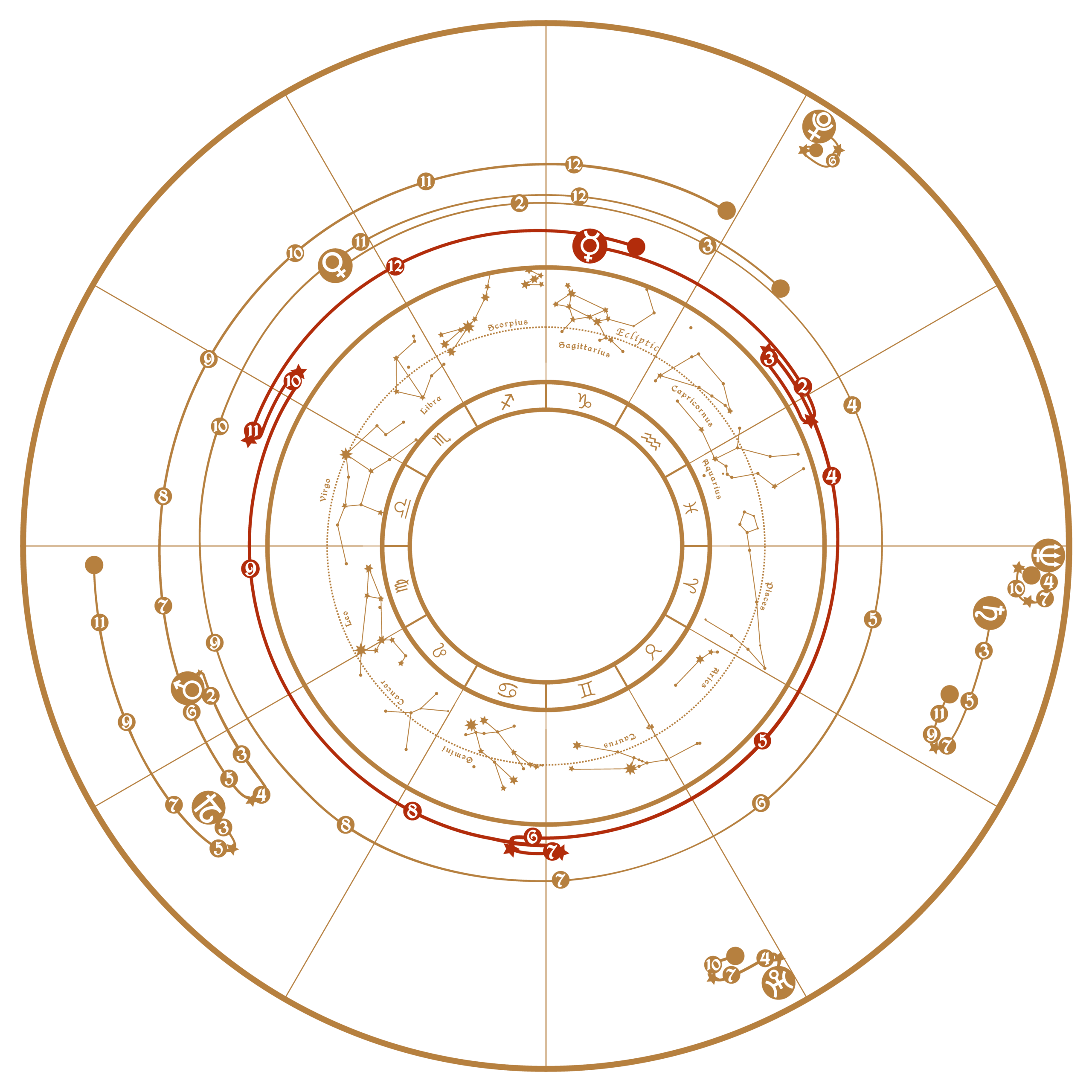
Trace the line connected to that symbol through the zodiac.
3. READ THE MONTHS
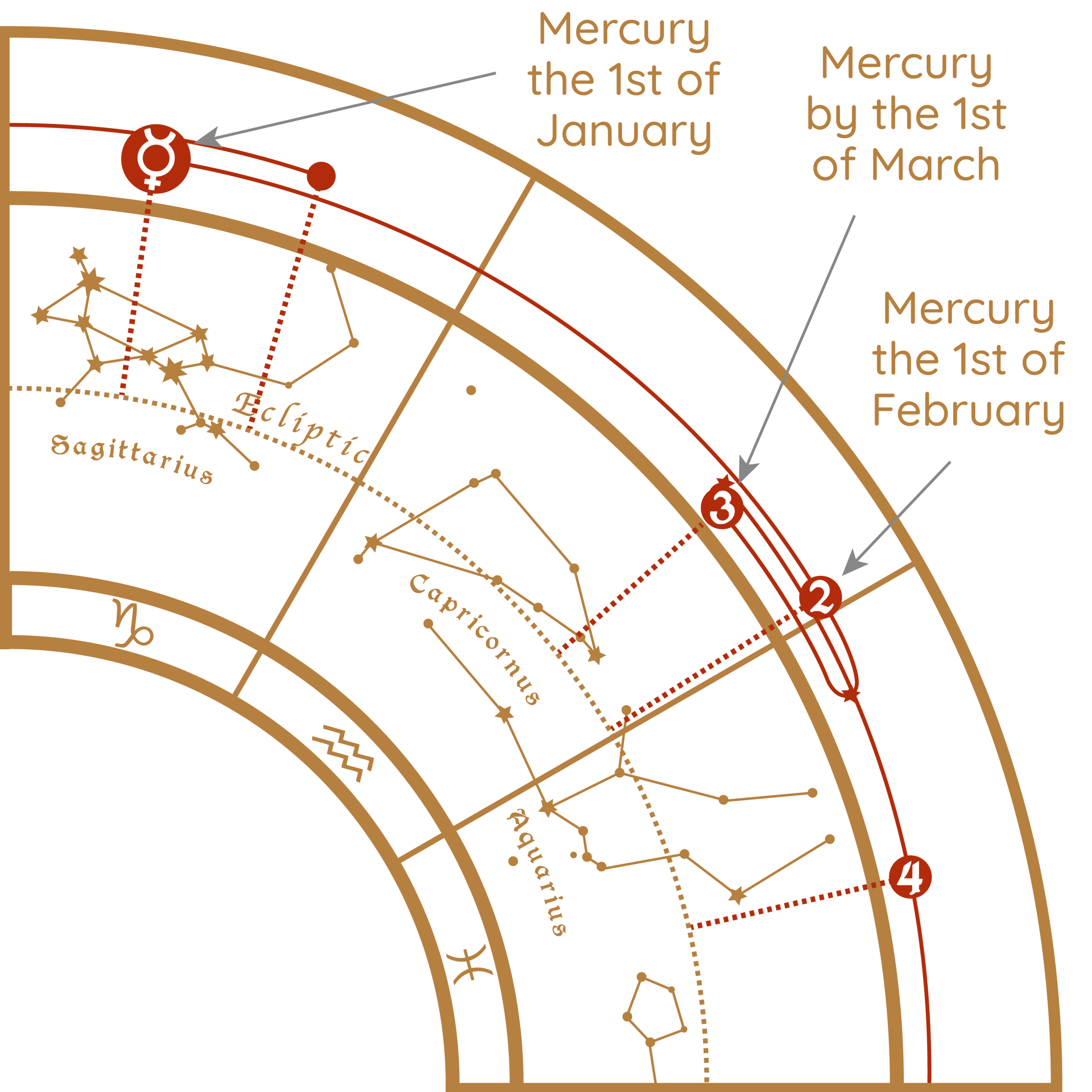
The numbered circles mark the planet’s position the first day of each month.
The position of each numbered marker shows where that planet appears in relation to the zodiac signs and constellations at the beginning of each month.
RETROGRADE MOTION
Stars along a planet’s path mark the dates when its apparent motion changes direction, entering or leaving retrograde motion.
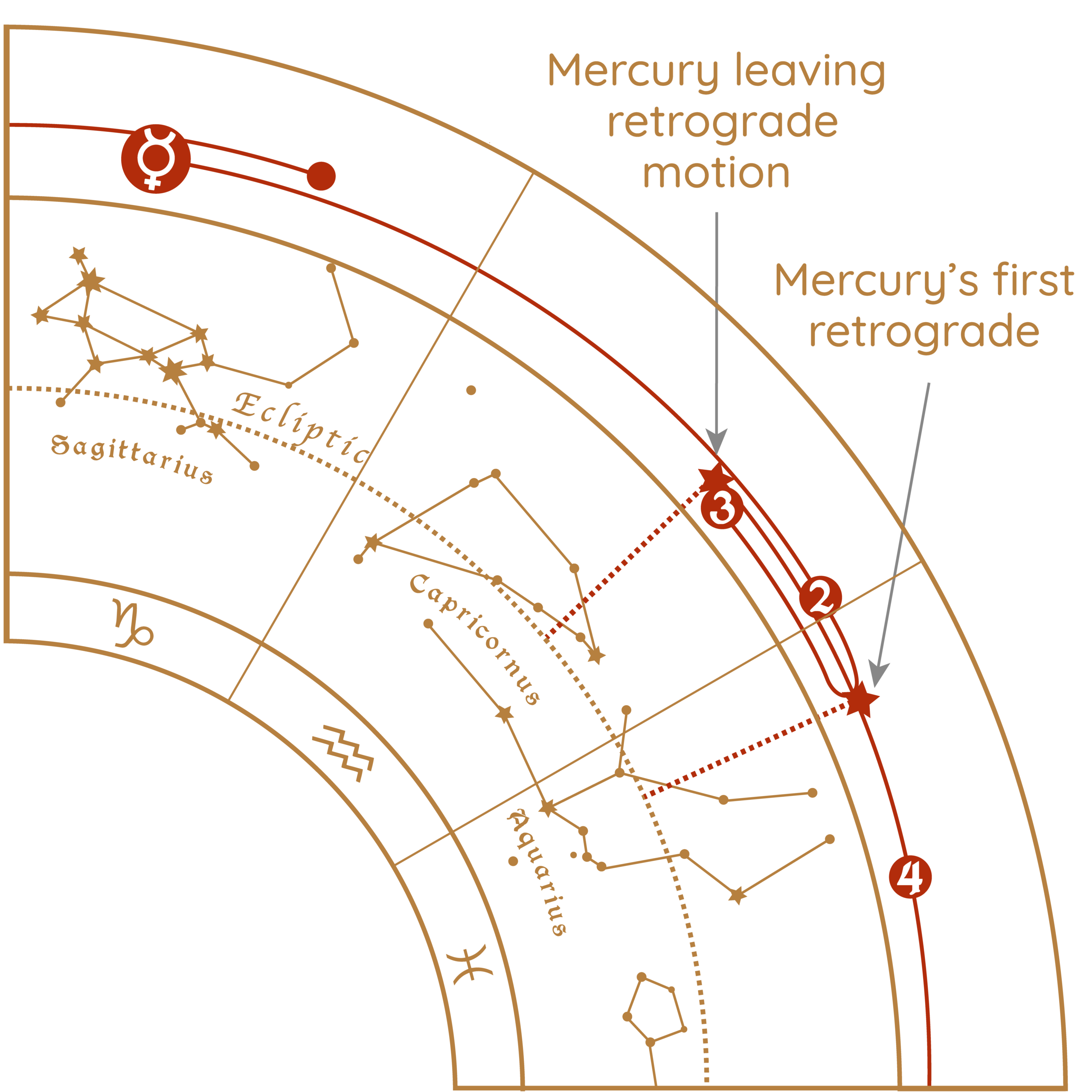
Exact dates for the start and end of retrograde motion can be found in the legend.
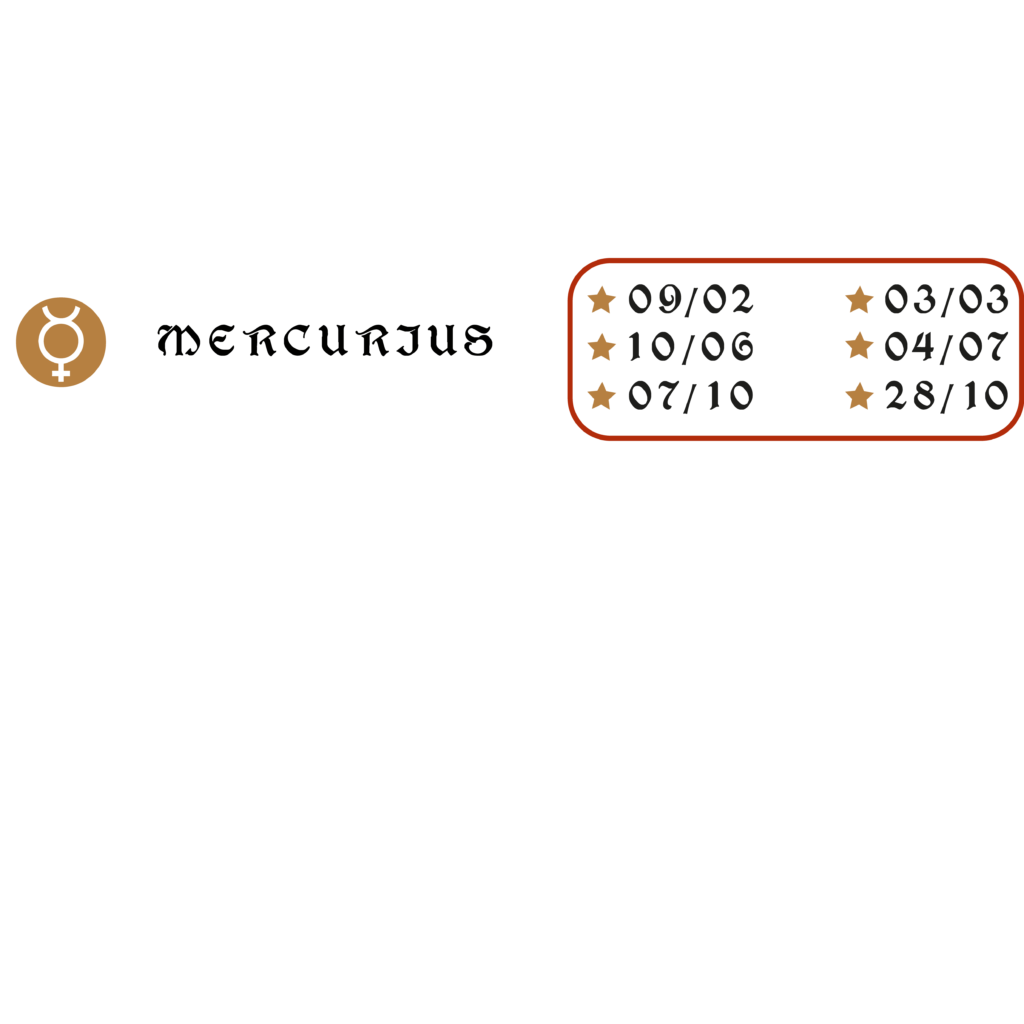
What is retrograde motion?
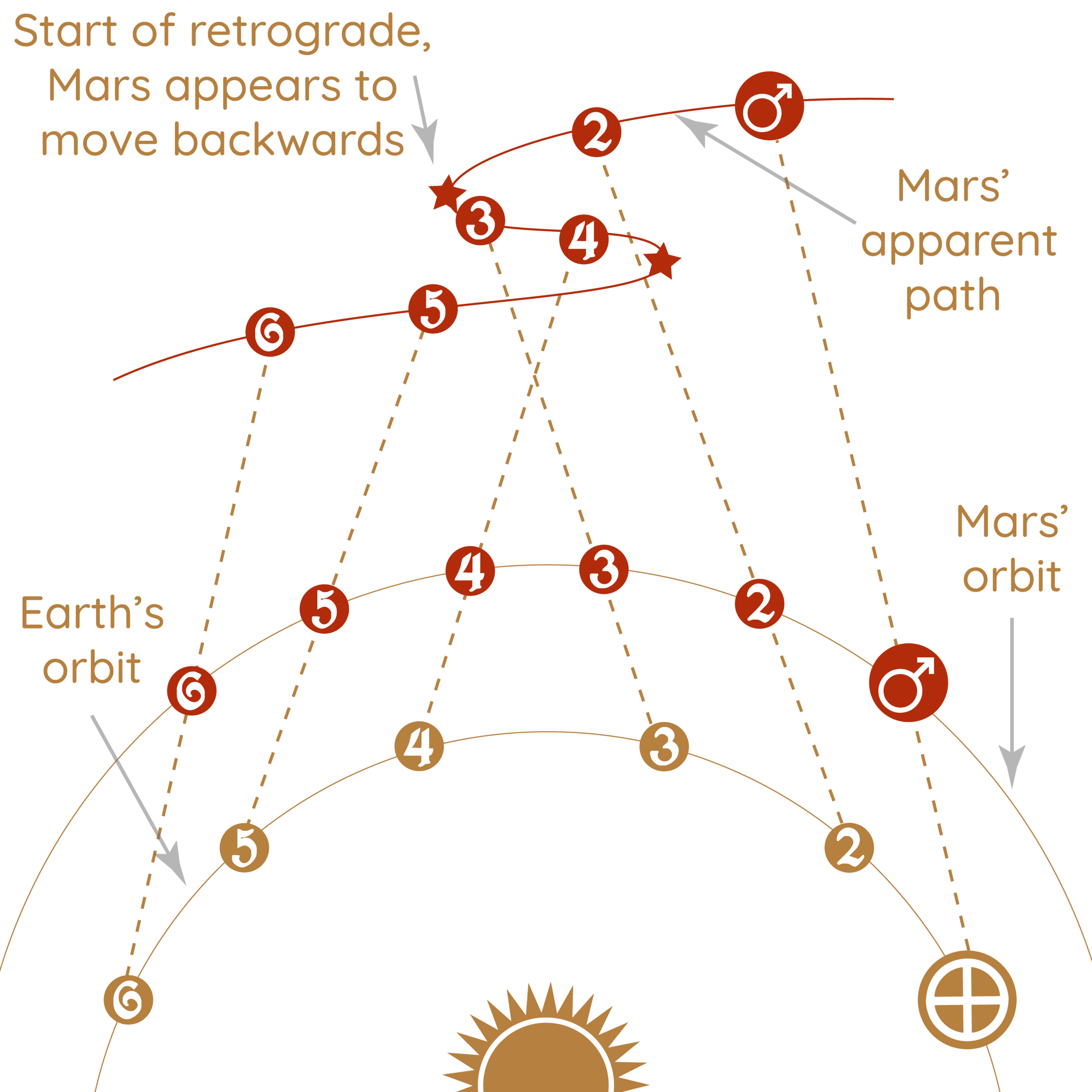
Retrograde motion is the apparent backward movement of a planet across the sky. As Earth and the other planets travel around the Sun at different speeds, our line of sight to them changes. This can make a planet appear to slow down, stop and briefly move backwards against the background of the stars, even though it continues moving normally along its orbit.
When this apparent backward movement begins, the planet is said to enter retrograde motion. When it ends and the planet appears to move forward again, it returns to direct motion. Both moments are marked on the calendar with star symbols.
THE SUN ☉
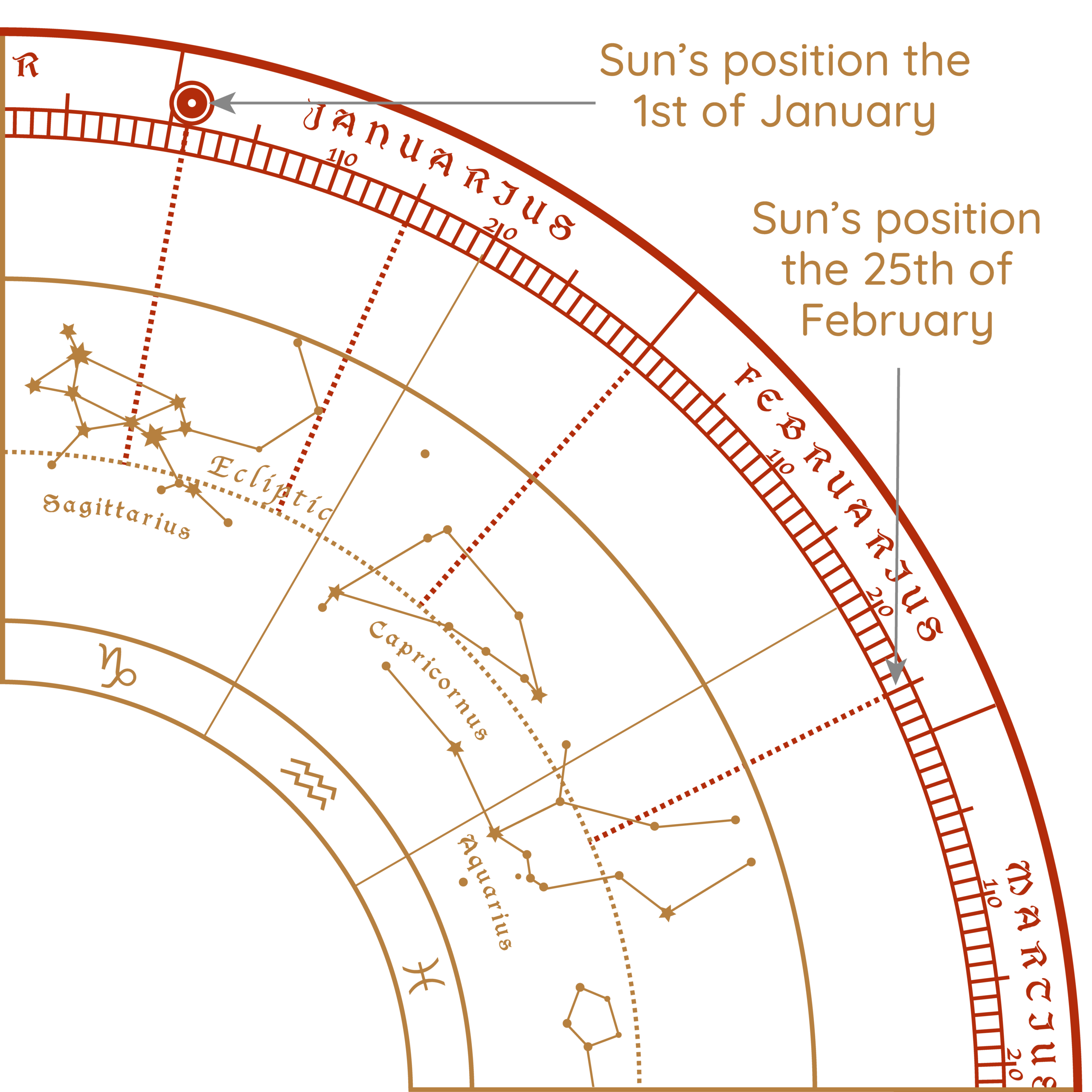
The Sun is represented in the same ring. Its path follows the ecliptic, and the dates along its line show its changing position against the zodiac constellations throughout the year.
The Sun’s path connects the planetary ring with the astronomical events shown further out in the calendar.
03 · OUTER RING
The outer circle uses the Sun’s yearly path as a timeline for the main astronomical events of 2027. Around it, you can find meteor showers, equinoxes and solstices, Moon phases and changes in the Moon’s distance from Earth.
METEOR SHOWERS
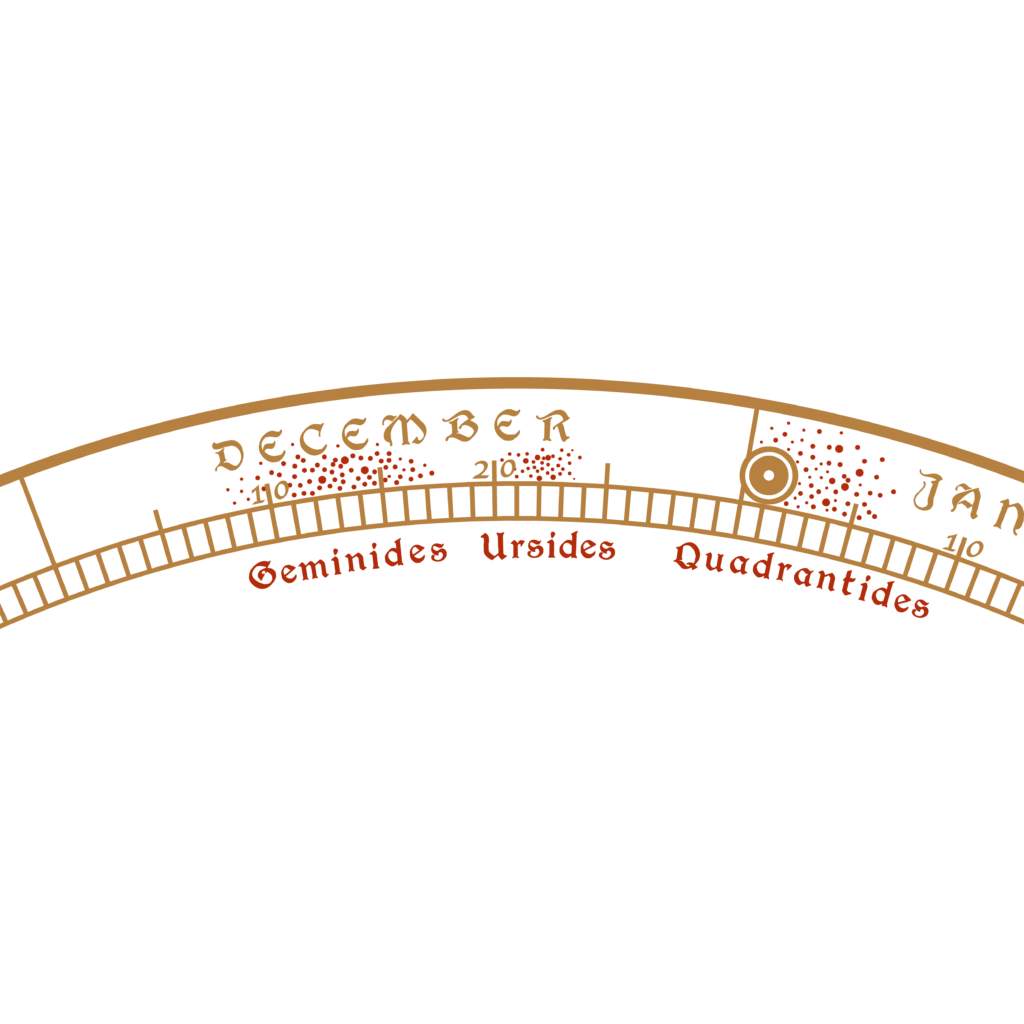
Their names and dates are placed along the Sun’s yearly path, showing when each meteor shower reaches its peak.
EQUINOXES & SOLSTICES
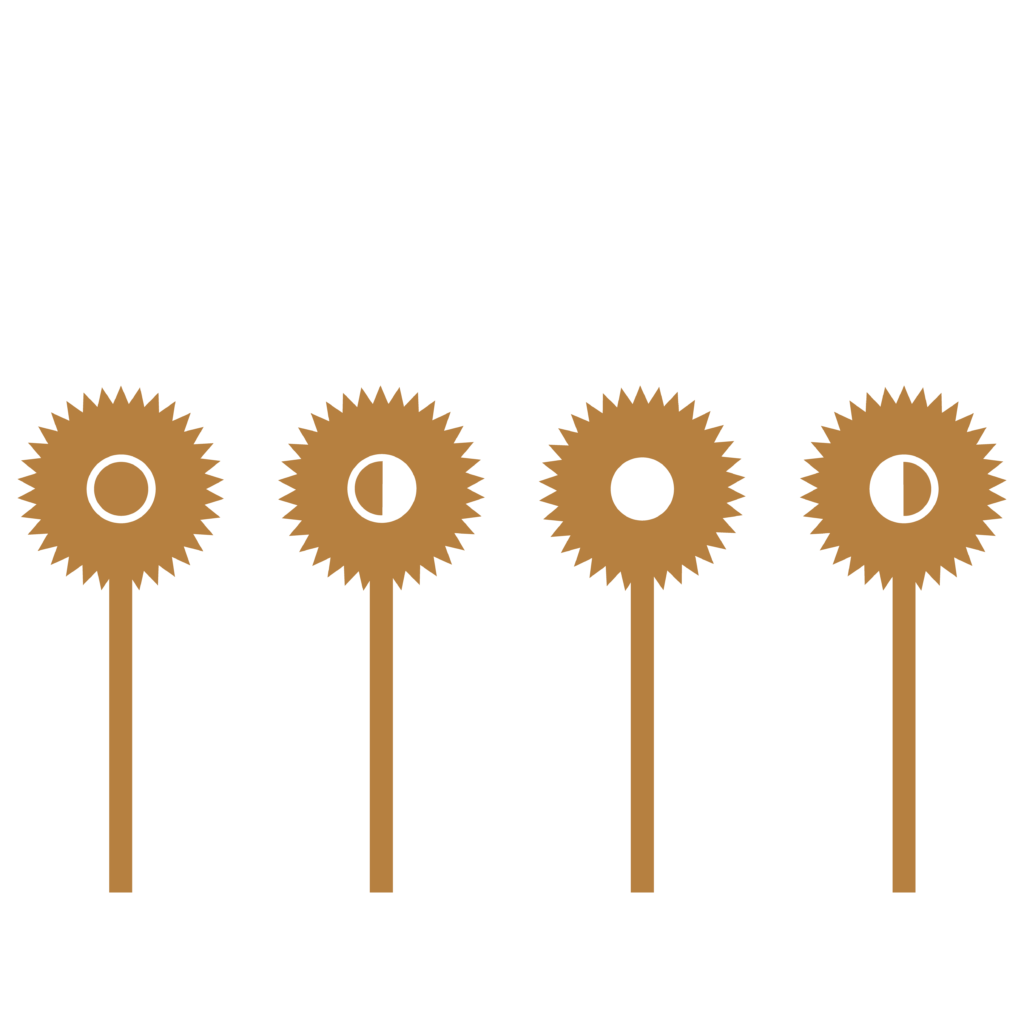
These four points mark the beginning of the astronomical seasons and are identified by their symbols in the legend.
MOON PHASES
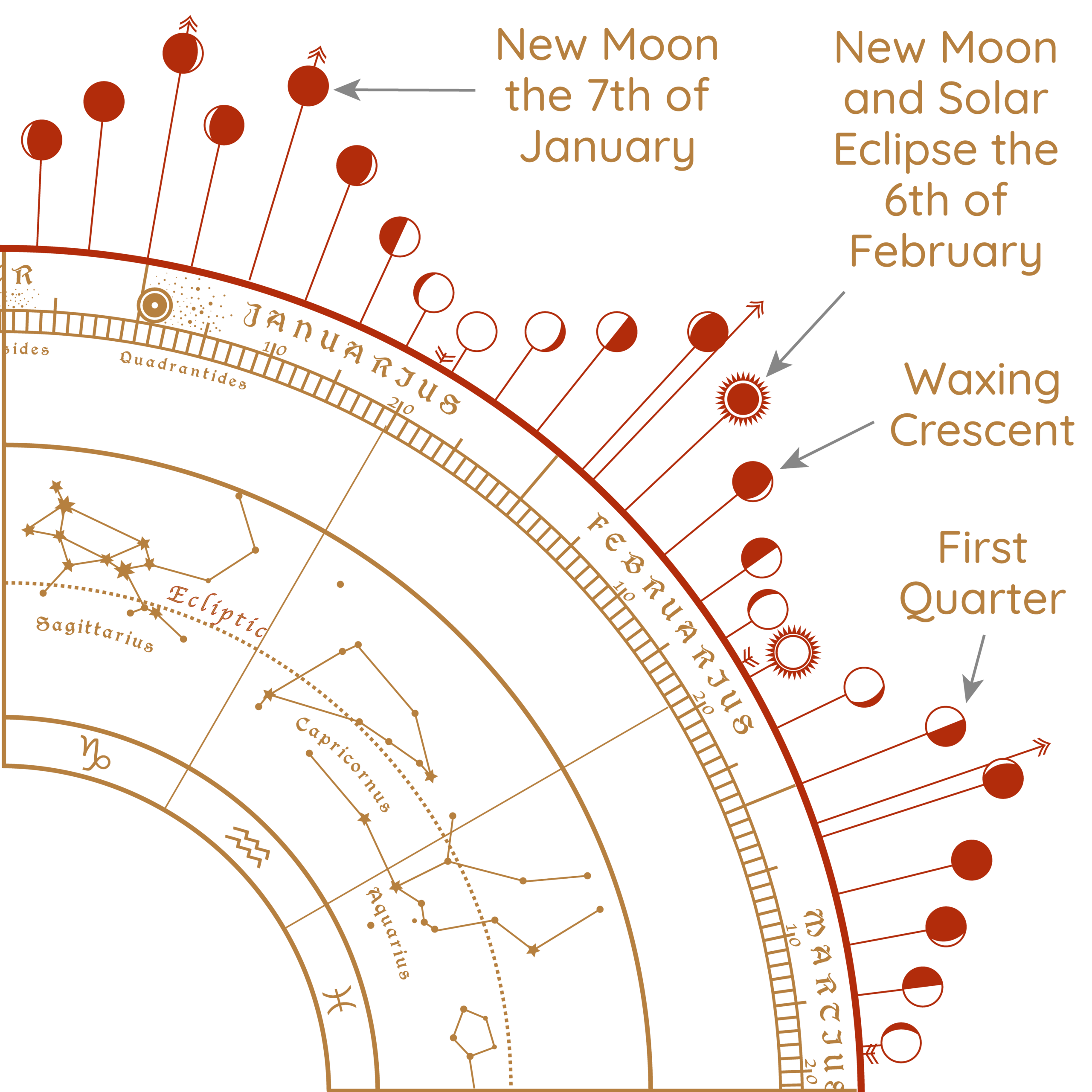
The lines extending beyond the circle mark the main Moon phases throughout each month.
LUNAR DISTANCE
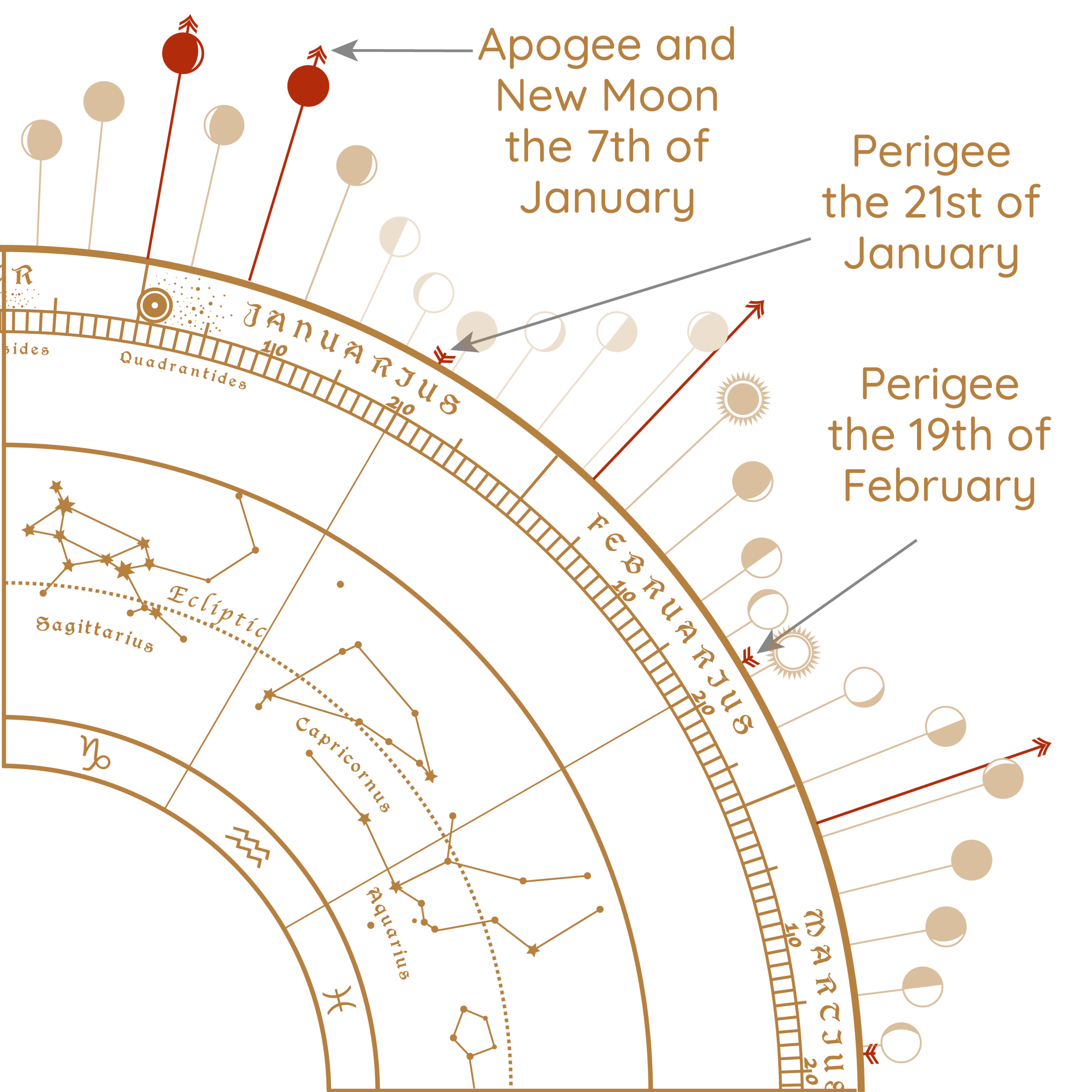
A downward arrow marks the perigee, when the Moon is closest to Earth. An upward arrow marks the apogee, when it is farthest away.
SUPER MOON

When a Full Moon occurs close to perigee, it is commonly known as a Supermoon, meaning it appears slightly larger and brighter in the sky as seen from Earth.
Why does the Moon's distance change?
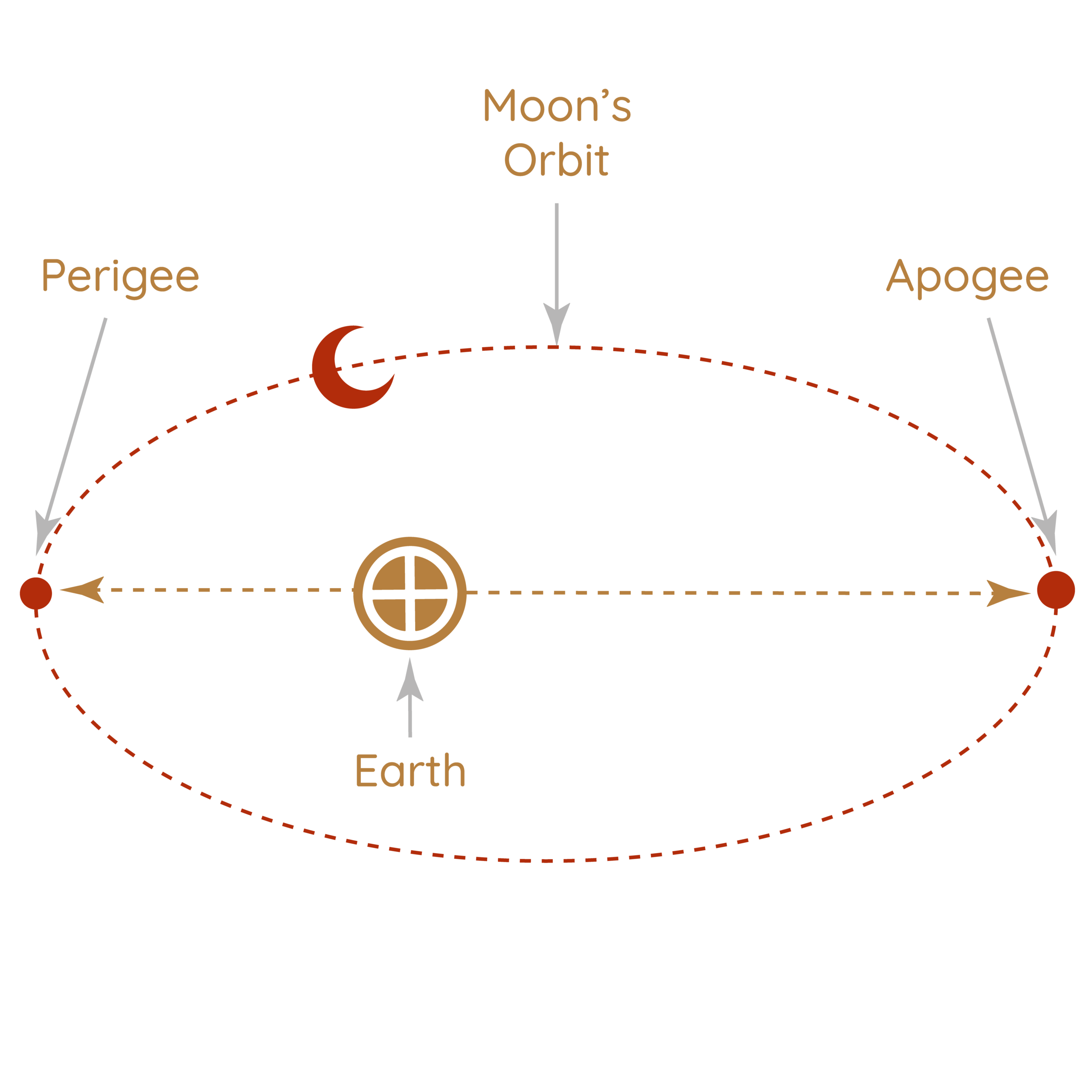
The Moon’s orbit around Earth is not a perfect circle. Its distance therefore changes throughout each orbit, reaching a closest point, the perigee, and a farthest point, the apogee.
04 · LOOK UP

We hope this calendar invites you to observe the sky around us: its cycles, rhythms and patterns, and the ways in which they connect us to the movements of the cosmos.
Look up, follow the cycles, and enjoy the celestial dance!
05 · KEEP OBSERVING
FROM THE CALENDAR TO THE SKY ✦
Your Astronomical Calendar tells you where the Sun, Moon and planets are located in relation to the zodiac constellations throughout the year. Our astronomical planisphere helps you identify those constellations in the night sky.
Used together, the calendar tells you what to look for and the planisphere helps you find where to look.


How to use them together
1 · Choose a planet and a date
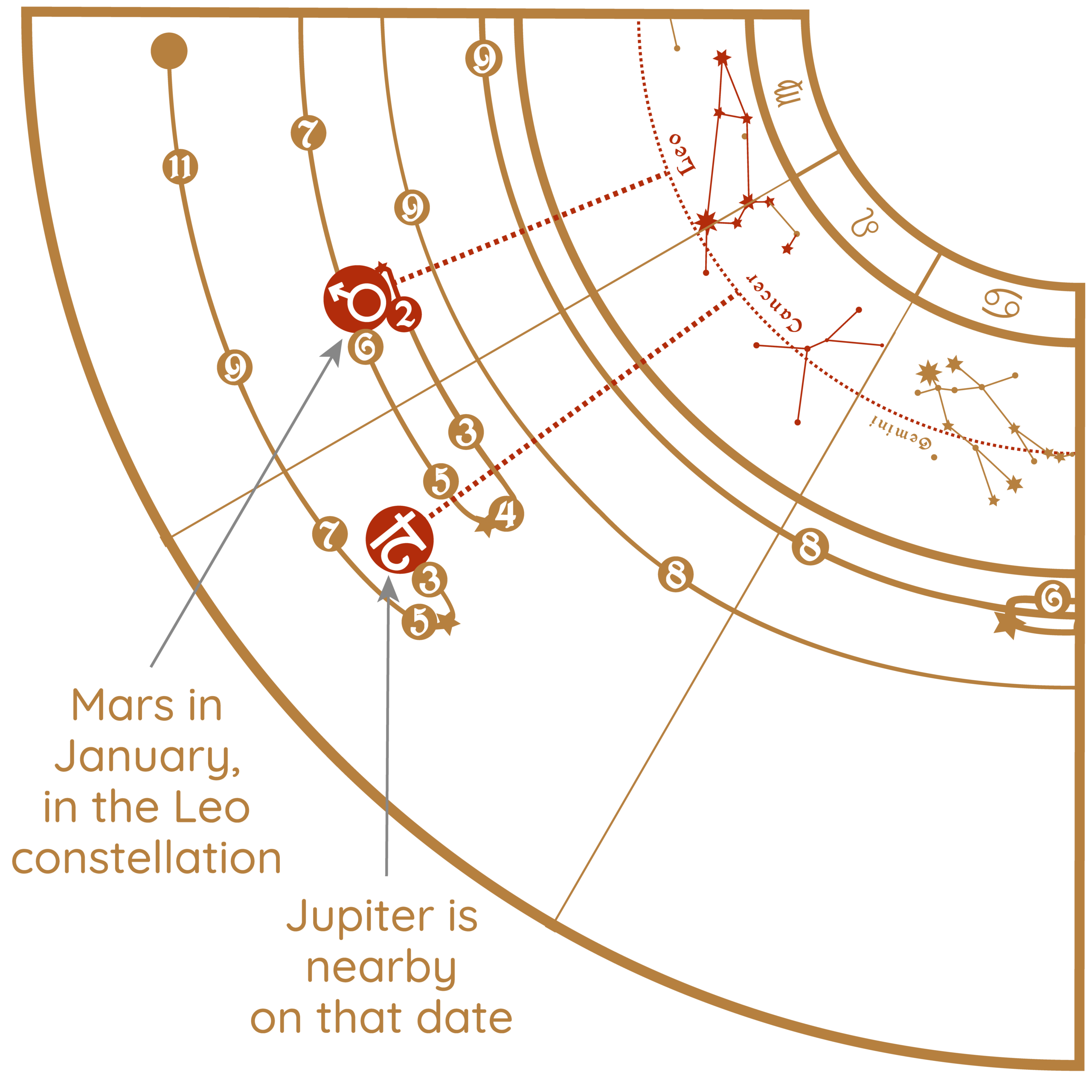
Find the planet’s symbol on the Astronomical Calendar and follow its path to the date you want to observe. The calendar will show you which zodiac constellation the planet is passing through at that time.


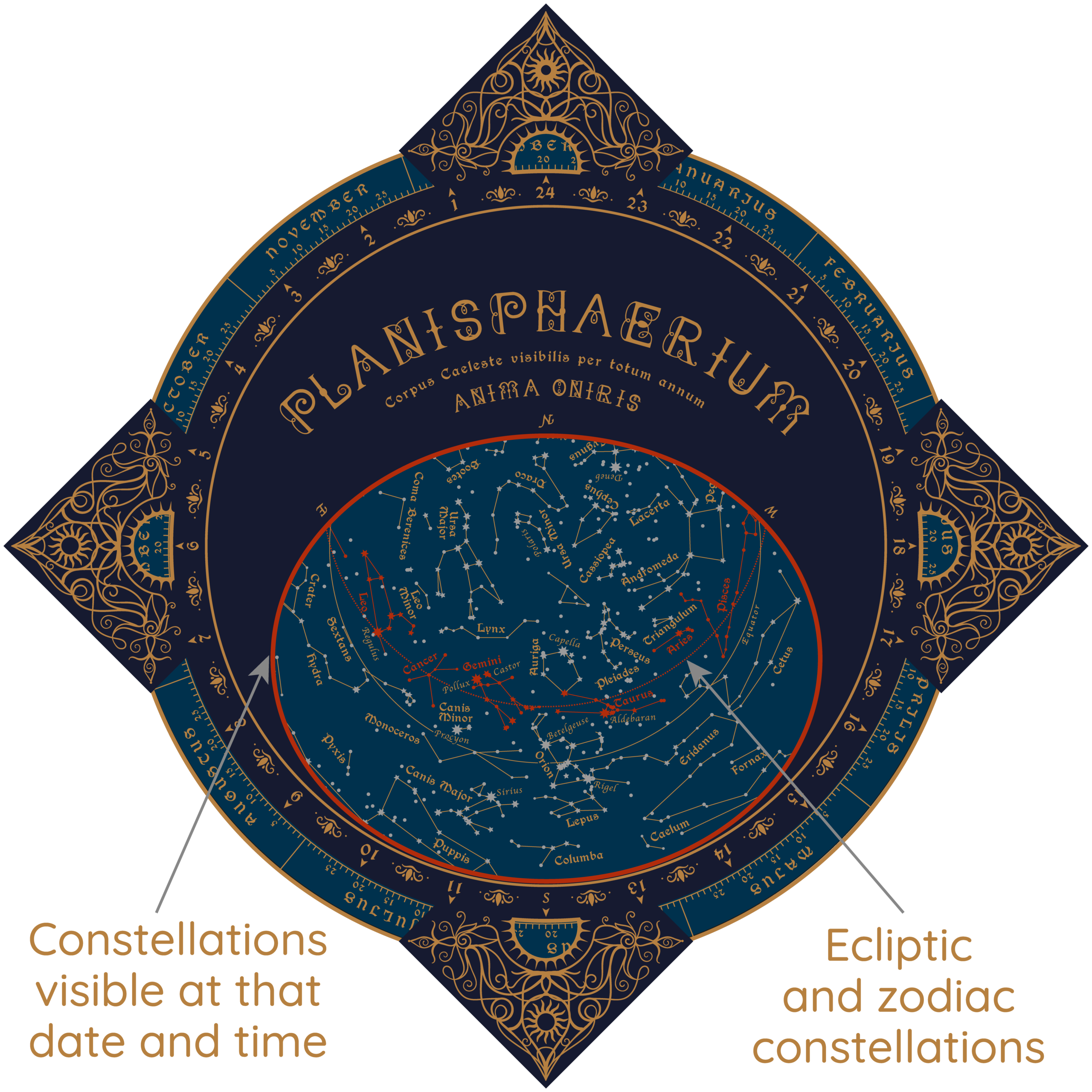
3 · Find the zodiac constellation
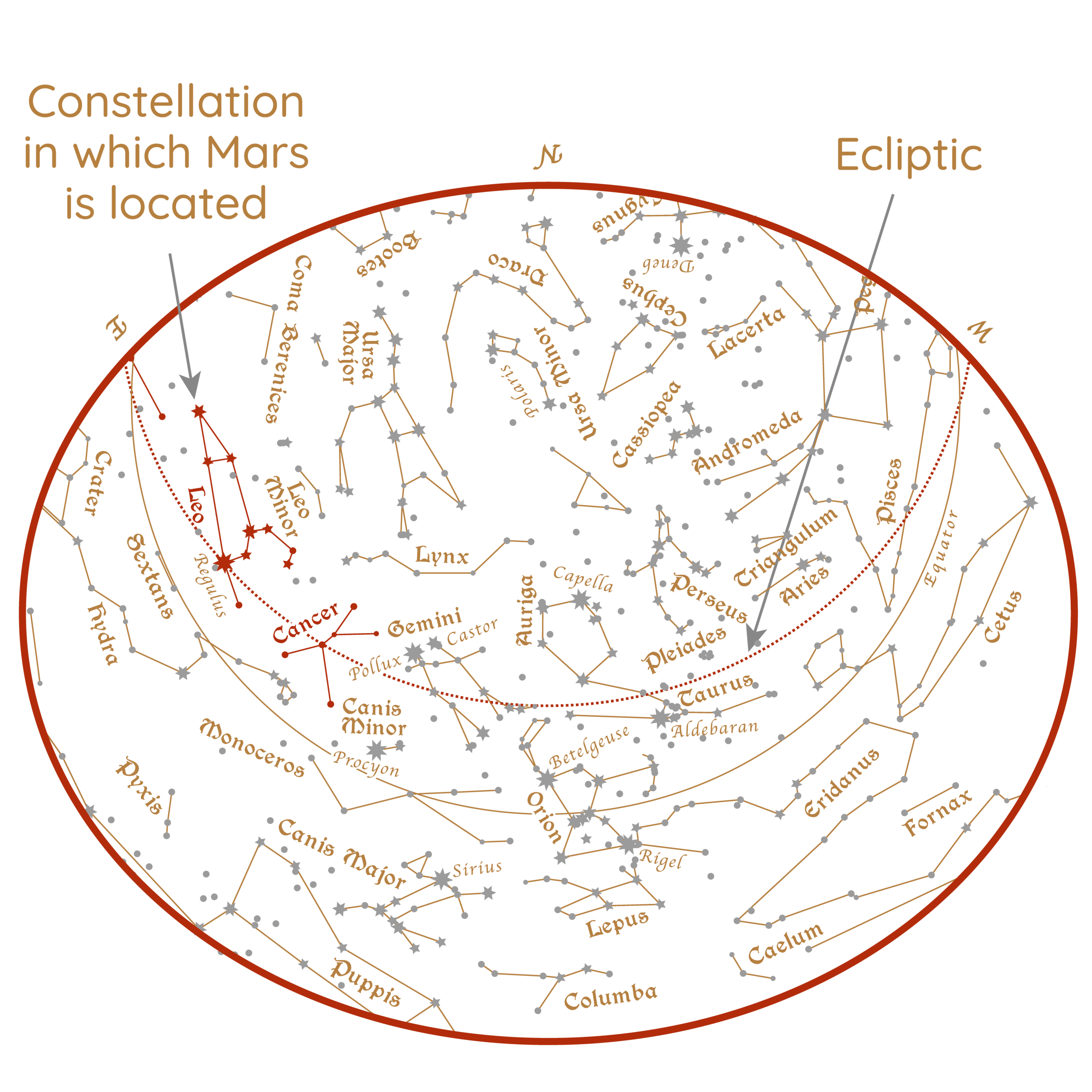
Locate on the planisphere the constellation indicated by the calendar. This gives you a reference area of the sky in which to look for the planet.
4 · Look for the planet
Once you have found the constellation in the real sky, look around that area for the planet. Its position will change gradually against the background of the stars as the year progresses.
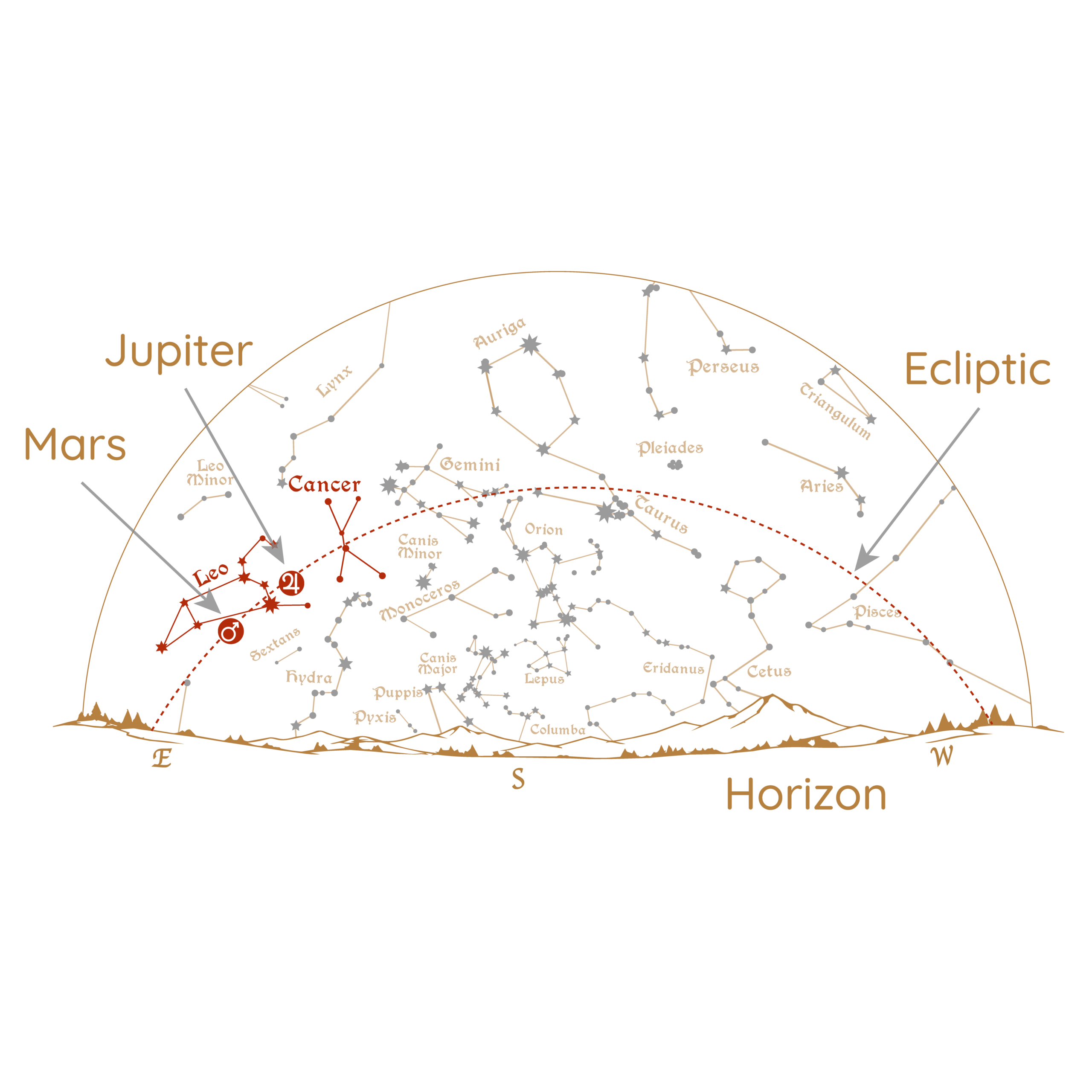
Keep in mind: a planet appearing in a certain position on the calendar does not necessarily mean that it will be visible at any time during the night. Its visibility also depends on the time, its position relative to the Sun, and whether it is above your horizon. You can check its visibility using the Planisphere.
Looking between two monthly markers?
If the date you want to check falls between two numbered points (the beginning of each month), follow the planet’s path between them and estimate its position based on how far the month has progressed.
If you have any questions, we’d love to hear from you at contact@animaoniris.com
Designed by Anima Oniris.
Locally screen printed using traditional methods.
© 2027 Anima Oniris. All rights reserved.
This calendar, guide and their original graphic design may not be reproduced or distributed without permission.